Neuro-affirming speech-language therapy supporting communication, participation and belonging.
Every autistic and neurodivergent child has a unique communication profile. Assessment and intervention are tailored to each young person’s strengths, interests, communication style and everyday environments, with practical recommendations that can be implemented across home, school and community settings.
Support may include:
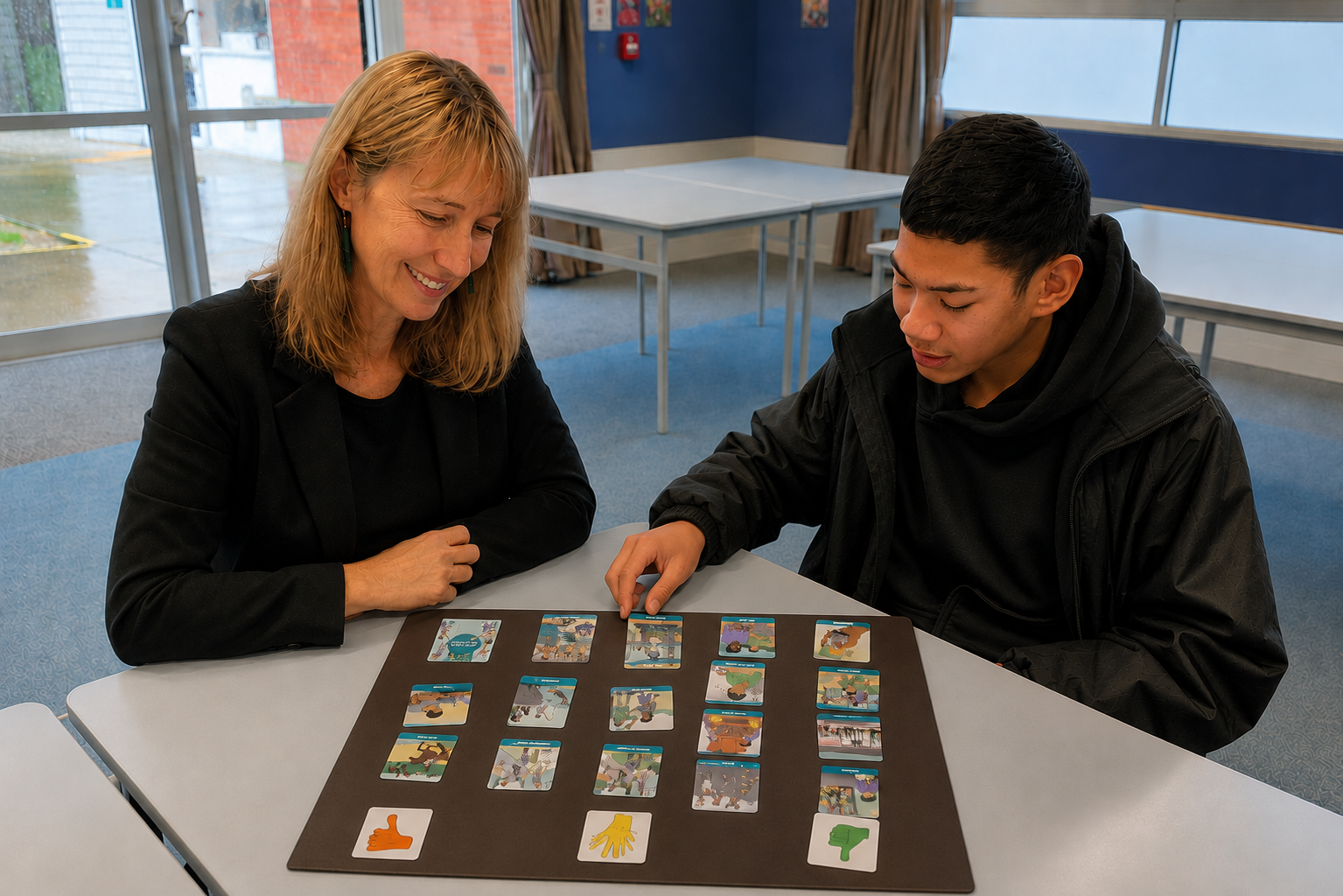
We support infants, toddlers, preschoolers, school-aged children and adolescents.
Some children are referred because they are late to talk or communicate differently from their peers. Others come for support with social communication, emotional regulation, executive functioning, AAC, speech clarity or school participation.
Whether queries arise in infancy or during the teenage years, assessment focuses on understanding each young person and their family’s unique communication profile and providing practical recommendations for home, education and community settings.

Some children present with characteristics of neurodivergence from infancy. Seeking support early can make a real difference in children’s social skills, language development, learning potential and confidence. For information about social communication stages, see babynavigator.com/scgc/.
We work with a range of neurodivergent presentations, such as Autism, ADHD, FASD, PDA, dyslexia, learning disability, mental health challenges and Tourette syndrome.
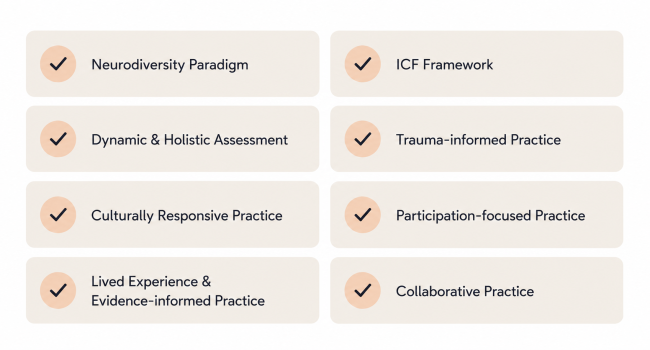
Our approach is grounded in a responsive, trauma-informed understanding of child development. We look beyond behaviour to understand the interaction between communication, sensory processing, emotional regulation, relationships and the environments in which children live, learn and participate. Drawing on principles of whakawhanaungatanga, whakamana and neurodiversity-affirming, evidence-informed practice, we work collaboratively to build on strengths, reduce communication barriers and support authentic participation, confidence and connection in everyday life.